Umówmy.to
I had the pleasure of working as the Lead UX Designer on an alternative solution to Booksy. In addition to UX design, my responsibilities covered UX research, branding, and UI design.
Project Scope
The project kicked off with meetings involving stakeholders, who had a well-defined business concept, and the development team responsible for implementing the application.
The purpose of the meeting was to understand the core project goals, the stakeholders' mindset, and the developers' technical capabilities regarding their chosen framework. This alignment aimed to prevent unwanted project pivots and late-stage code changes.

Branding
Leveraging my experience, I was asked to deliver a complete branding package for the company, including the logo, logotype, and a comprehensive visual identity system.
The visual identity process began by emphasizing the company's Polish roots, meaning the name had to be in Polish. Together with the team, we iterated through several concepts and selected "umówmy.to" as a compelling option. It featured a native Polish origin, the distinct Polish letter "ó", and a built-in call to action. A quick domain check confirmed that the .to extension was available.

UX Process
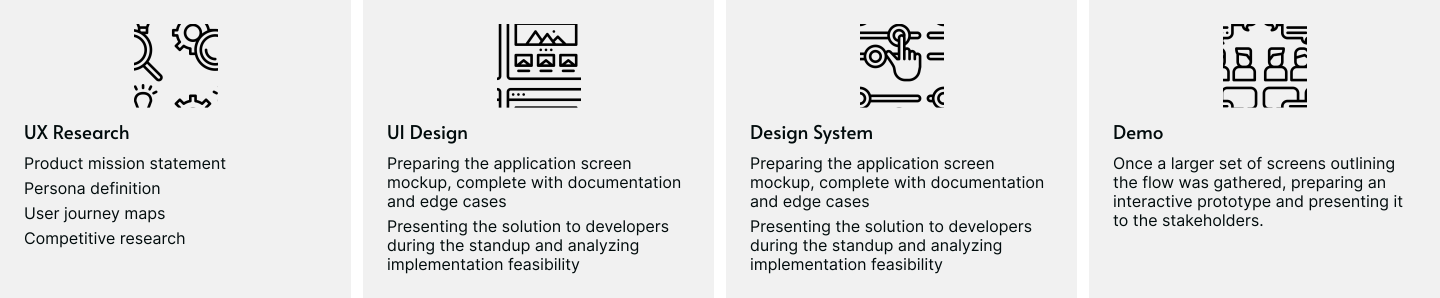
Due to direct access to stakeholders and the development team, we decided to work in sprints.
UI Design
Fully responsive design featuring light and dark modes, with optimized mobile layouts for every single screen.
Outcome
Working on this project was an excellent collaborative experience, built on close synergy with a highly experienced and open-minded development team.
A strong partnership with the front-end developers allowed me to build a dedicated design system from scratch, tailored specifically to the project's requirements. Together, we established an efficient validation process, enabling us to test and verify alternative architectural solutions and UX patterns prior to implementation.
A key element of our workflow was the frequent creation and evaluation of interactive prototypes, which successfully minimized design risks and optimized the final user interface before any code was written.